
- Test
- Crew Module–Service Module Separation Test
- Programme
- Gaganyaan (uncrewed G1 mission)
- Location
- Vikram Sarabhai Space Centre (VSSC), Thiruvananthapuram
- Announced
- October 16, 2026 (ISRO)
- Systems Validated
- Avionics, inertial navigation, thermal protection, deployable umbilical shield, pyrotechnic devices
- Result
- Successfully completed
- G1 Target Window
- Q4 2026, per ISRO Chairman V. Narayanan
- Next Milestone
- TV-D2 abort test, then G1 itself
What ISRO Just Tested
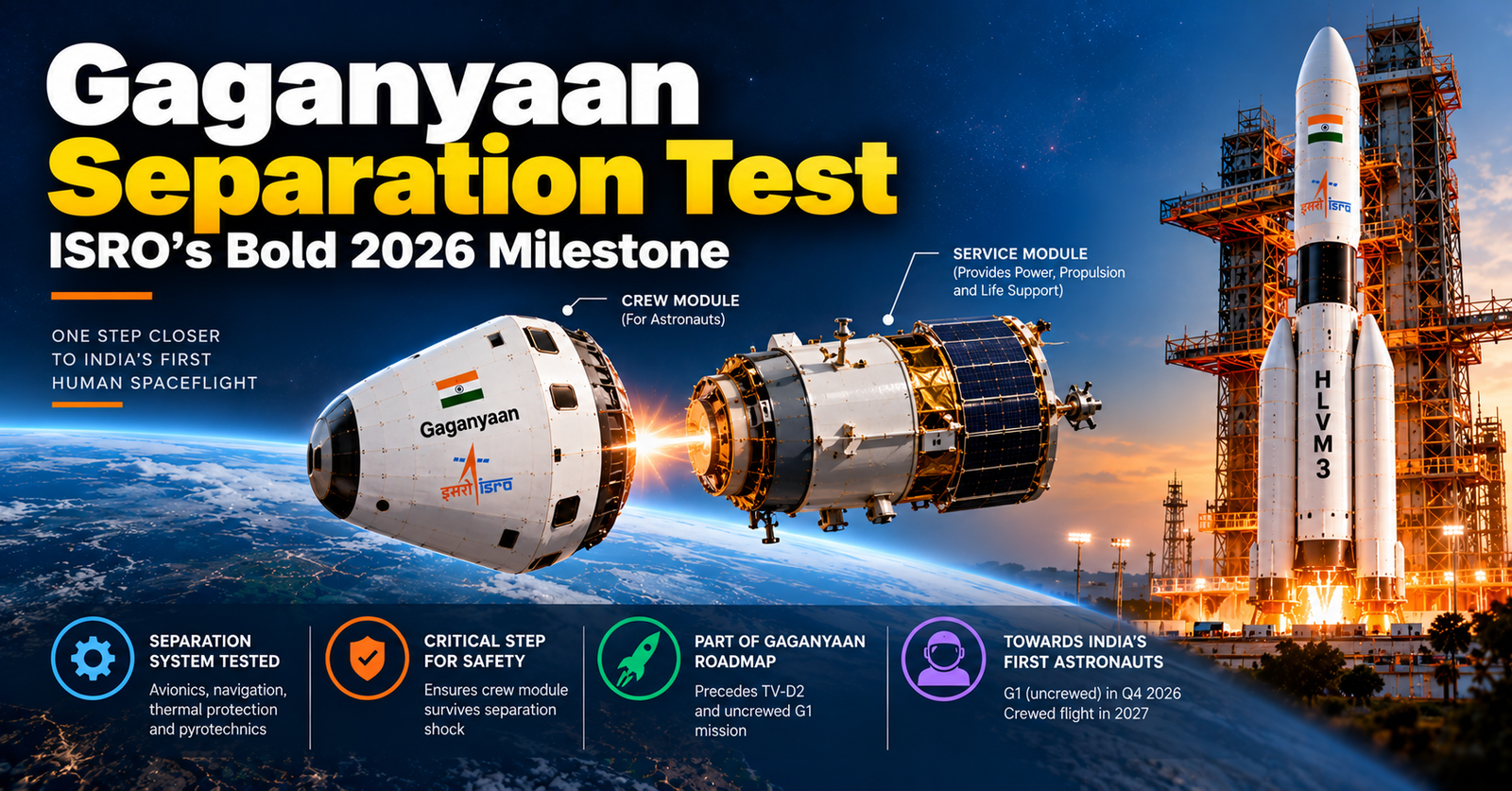
This Gaganyaan separation test is official: on October 16, 2026, ISRO announced it had successfully completed Crew Module–Service Module separation tests for the Gaganyaan programme, at the Vikram Sarabhai Space Centre (VSSC) in Thiruvananthapuram. Engineers built a heavily instrumented rig that recreated the full, integrated Crew Module-Service Module assembly, then simulated the separation sequence — including severing several of the umbilical connections that link the two modules together in flight.
It’s a dry run for one of the most safety-critical moments of any Gaganyaan flight: the instant the Crew Module, carrying the crew (or, for the first flight, a humanoid stand-in), physically detaches from the Service Module that has been feeding it power, propulsion, and life support throughout the mission.
Why This Test Matters
A clean separation isn’t just about the two modules coming apart — it’s about everything inside the Crew Module surviving the shock and vibration of that moment undamaged. ISRO says the test specifically validated the shock survivability of several systems that have to keep working right after separation, when the Crew Module is on its own for the first time: avionics, the inertial navigation system, the thermal protection system covering the capsule’s aft and conical heat shields, the Crew Module’s deployable umbilical shield, and the pyrotechnic devices built into both the Crew Module Uprighting System and the Thermal & Humidity Control System.
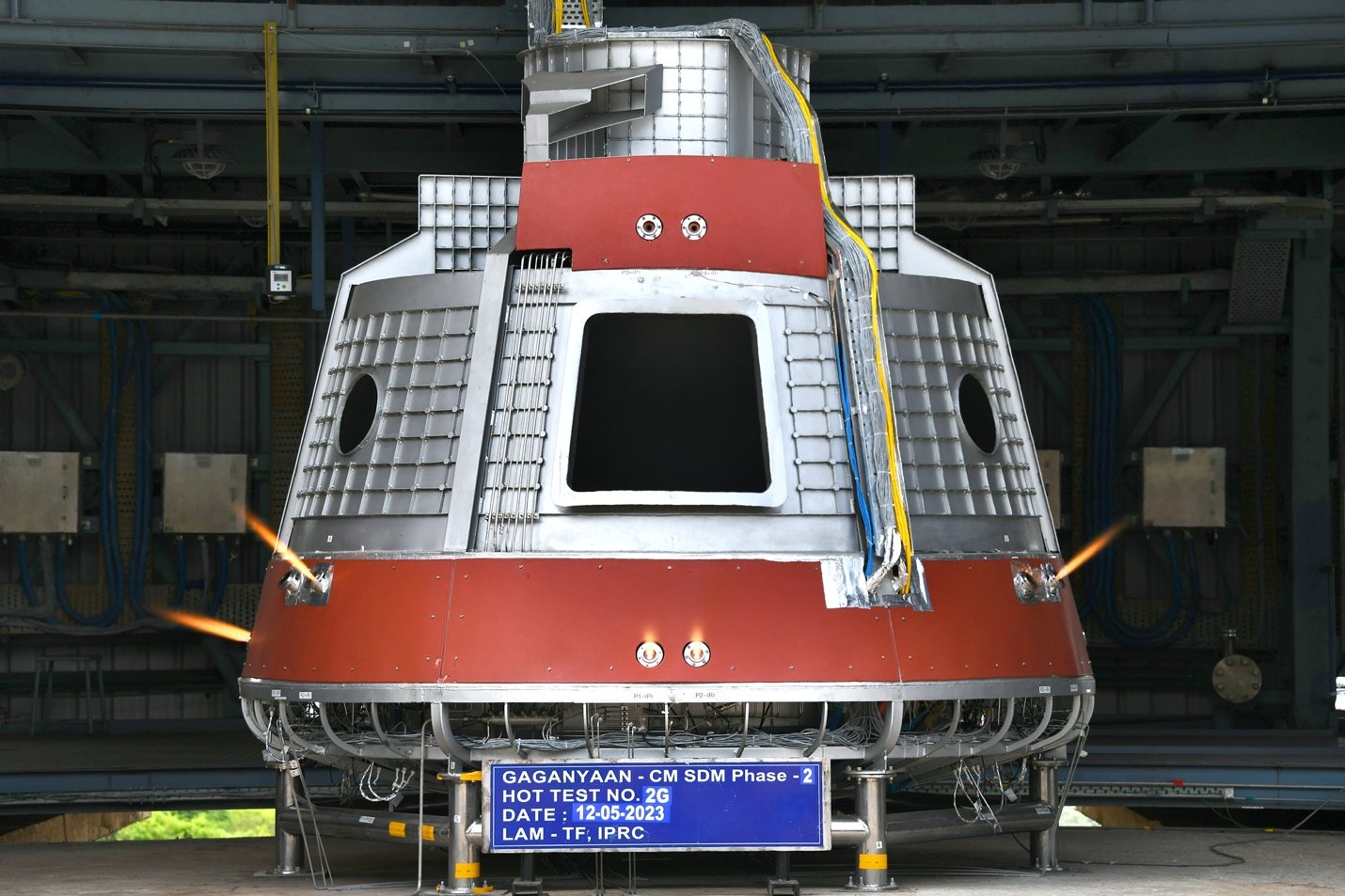
Pyrotechnic devices in particular are a one-shot system: they either fire correctly on the first and only try, or they don’t. Ground-testing them under conditions that mimic the real separation shock, rather than finding out during an actual flight, is exactly the kind of unglamorous validation work that has to happen before ISRO will trust the system with a human crew.
Where This Fits in Gaganyaan’s Timeline
Gaganyaan has slipped repeatedly from its original December 2020 target — pushed first by COVID-19, then by a string of revised windows (2021, early 2025, Q4 2025) as ISRO worked through an unusually long qualification campaign for a first-of-its-kind Indian human-rated capsule. The current target, reaffirmed by ISRO Chairman V. Narayanan earlier this year, is the uncrewed G1 mission launching in Q4 2026, with the first crewed flight to follow in 2027.
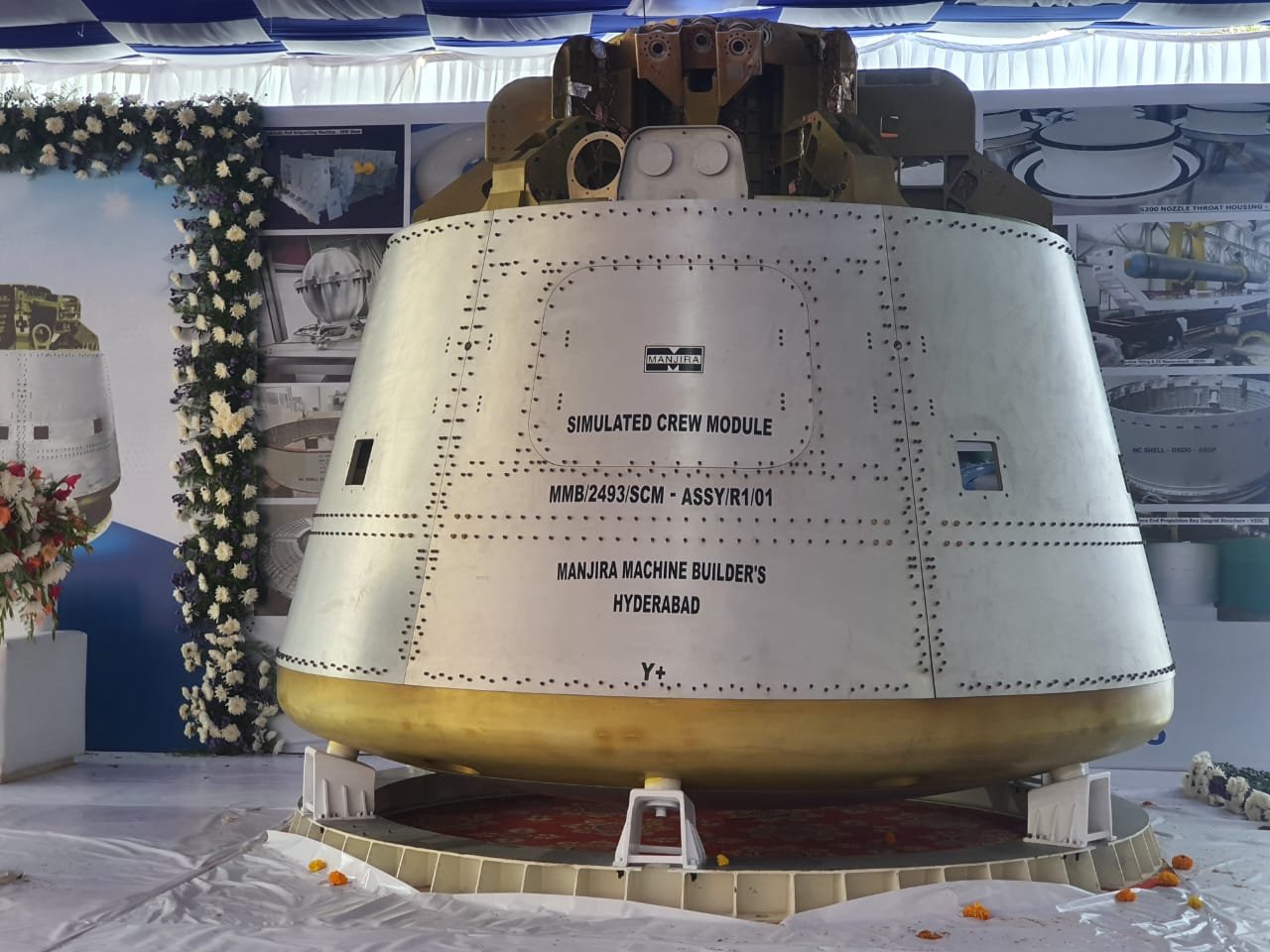
This separation test joins a long list of 2026 milestones already cleared: a successful air-drop test of the Crew Module’s parachute descent system over the Bay of Bengal in April, integration of the Vyommitra humanoid robot that will ride along on G1, and qualification tests of the uprighting system and umbilical mechanisms. Each one chips away at the list of things ISRO needs to prove work before it will commit to a launch date.
What’s Left Before G1 Flies
The separation test is a ground validation, not a flight test — it proves the hardware design works on a test rig, not that the full stack will behave the same way riding an actual HLVM3 rocket off the pad. A few things still stand between here and G1’s launch:
- TV-D2, the uncrewed abort-system flight test that has to fly and succeed before any crewed mission is cleared, and whose own preparation has been running in parallel with this separation-test campaign
- Final integration of Vyommitra and the unpressurized life-support engineering model into the Crew Module that will actually fly on G1
- Stacking and final checkout of the full HLVM3 launch vehicle at Satish Dhawan Space Centre
- A confirmed launch date – ISRO has stated a Q4 2026 window but has not announced a specific date as of this test
None of this guarantees G1 flies before the end of the year. Gaganyaan’s history is a history of slipped quarters, and a Q4 2026 target with two months left on the calendar is tight. But a successful separation test is one fewer open question standing in the way.
Frequently Asked Questions
What test did ISRO just complete for Gaganyaan?
ISRO successfully completed Crew Module–Service Module separation tests at the Vikram Sarabhai Space Centre, announced October 16, 2026. The test simulated the separation sequence, including severing umbilical connections, and validated that key Crew Module systems survive the shock undamaged.
Why is this Gaganyaan separation test important?
Separation is one of the most safety-critical moments of any crewed flight – everything the Crew Module needs to keep working, from avionics to navigation to its pyrotechnic uprighting systems, has to survive that shock on the first and only try. Ground-testing it now catches problems before they happen in flight.
When will Gaganyaan G1 actually launch?
ISRO Chairman V. Narayanan has stated a Q4 2026 target for G1, the first uncrewed Gaganyaan mission. No specific launch date has been announced as of this separation test, and the programme’s history of slipped timelines means that window isn’t guaranteed.
What is G1 and who (or what) is flying on it?
G1 is the first uncrewed Gaganyaan test flight. It will carry Vyommitra, a half-humanoid robot built to simulate crew functions, along with an unpressurized engineering model of the life-support system, into a low-Earth orbit before returning for recovery.
What still has to happen before G1 flies?
TV-D2, the uncrewed abort-system test, still needs to fly successfully; Vyommitra and the life-support model need final integration into the Crew Module; and the full HLVM3 stack needs to be assembled and checked out at Satish Dhawan Space Centre.
When will Indian astronauts actually fly on Gaganyaan?
ISRO’s current target for the first crewed Gaganyaan flight is 2027, after both the uncrewed G1 mission and the TV-D2 abort test have flown successfully.
The Bottom Line
No single ground test makes a crewed spaceflight programme ready to fly. But Gaganyaan’s path to G1 is made up of exactly this kind of unglamorous validation work — parachute drops, pyrotechnic checks, separation rigs — each one closing off a way the mission could fail. ISRO still hasn’t named a launch date, and a Q4 2026 window is closing fast. But with the Crew Module-Service Module separation system now validated, there’s one fewer reason for it to slip further.