
- Company
- Bellatrix Aerospace
- Founded
- 2015
- Founders
- Rohan Ganapathy & Yashas Karanam
- Headquarters
- Bengaluru, India
- Focus
- Satellite propulsion & orbital transfer vehicles
- 2026 funding raised
- $20 million (~₹190 Cr) Pre-Series B
- Latest deal
- VLEO demo satellite with Korea’s TelePIX (June 2026)
- First full satellite
- Harbinger — launched 30 Mar 2026
- What Is Bellatrix Aerospace?
- From Rocket Dreams to Rocket Fuel
- The Hardware: Thrusters, Green Propellant and a Space Tug
- Harbinger: Bellatrix’s First Full Satellite Phones Home
- Going Global: The TelePIX Deal and the Bet on Very Low Earth Orbit
- The $20 Million Question: Scaling From Prototype to Production
- Bellatrix vs India’s Other Space-Tech Startups
- What Could Go Wrong
- Why Bellatrix Matters for India’s Space Economy
- Frequently Asked Questions About Bellatrix Aerospace
- The Bottom Line
What Is Bellatrix Aerospace?
Bellatrix Aerospace is a Bengaluru-based space-tech company that builds the propulsion systems satellites need to reach their final orbit, stay there, and eventually leave it responsibly — and, increasingly, entire small satellites of its own. It doesn’t build rockets anymore, despite starting out that way; it builds what sits inside and on top of them.
The pitch is narrow, and deliberately so: propulsion is one of the few satellite subsystems most Indian space startups still import, and Bellatrix wants to be the default domestic supplier — for Indian satellite makers first, and for the wider small-satellite industry after that. 2026 has been the year that pitch started looking real: a flight-proven satellite of its own, a serious international customer, and a $20 million raise to fund the jump from prototype to production.
From Rocket Dreams to Rocket Fuel
Rohan Ganapathy and Yashas Karanam founded Bellatrix Aerospace in 2015, initially aiming to build small launch vehicles themselves — the same ambition peers like Agnikul Cosmos would later pursue. In February 2021 the company even announced a partnership with fellow Indian launch-vehicle startup Skyroot Aerospace. But by February 2022, Bellatrix made a deliberate pivot: instead of competing to build rockets, it would focus entirely on propulsion systems — the thrusters and engines that move a satellite around once it’s already in space, rather than the vehicle that gets it there in the first place.
It’s a less glamorous business than building rockets, but arguably a smarter one for a small company to bet on. Every satellite that reaches orbit still needs a way to correct its position, avoid debris, de-orbit at end of life, or get nudged into its precise final orbit — and most Indian satellite builders were buying that hardware from Europe or the US. Bellatrix set out to be the local alternative.
The Hardware: Thrusters, Green Propellant and a Space Tug
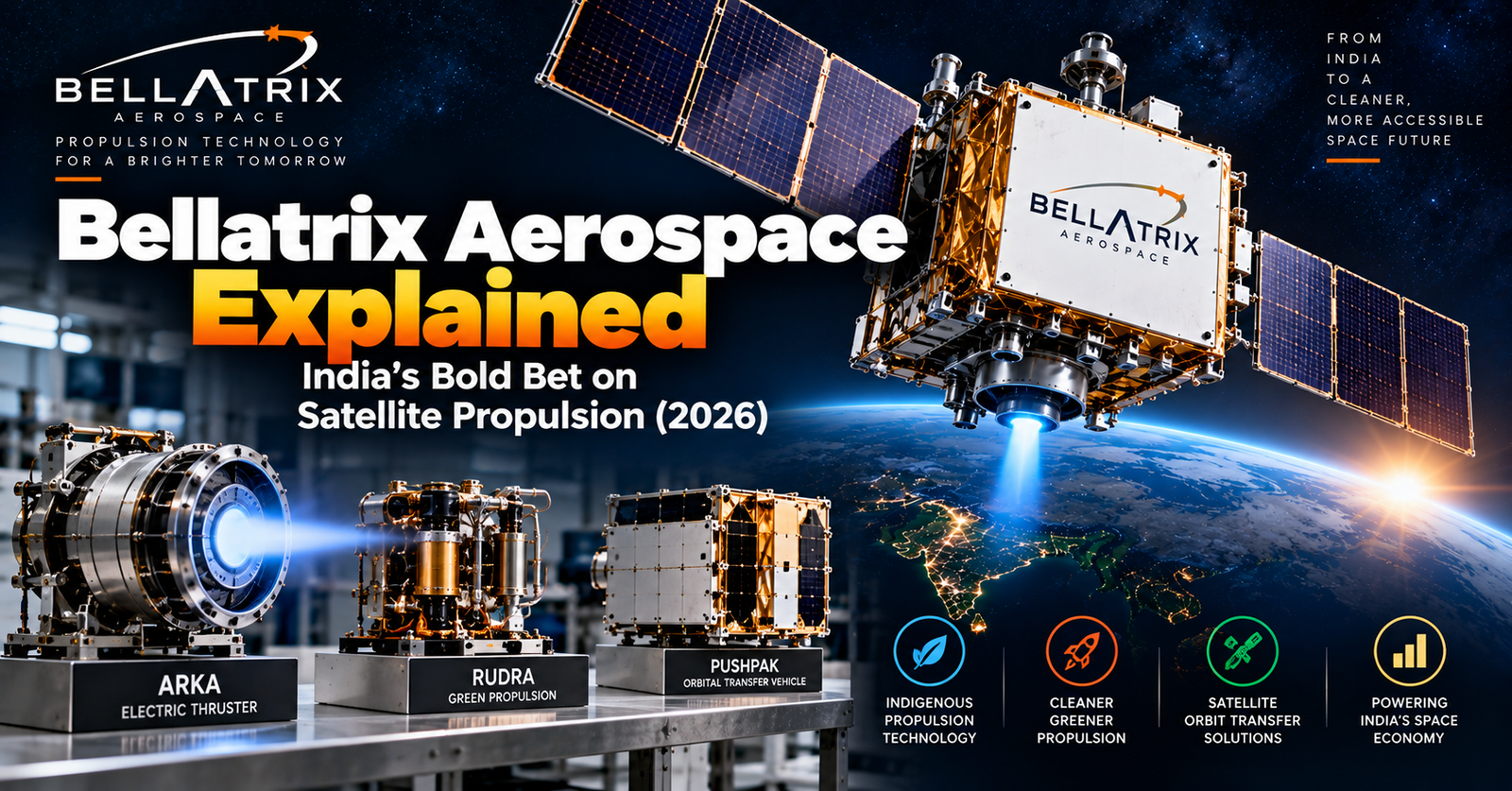
Bellatrix Aerospace’s product line has three main pieces. Arka is a Hall-effect thruster — an electric propulsion system that ionises a propellant gas and accelerates it with a magnetic field to generate thrust. Electric thrusters like Arka use a fraction of the propellant a traditional chemical engine needs, at the cost of very low thrust — fine for a satellite that has months to reach its final orbit, not for getting off the ground.
Rudra is a High Performance Green Propellant (HPGP) chemical thruster, using a non-toxic, storable propellant instead of the hydrazine most satellites still rely on, which is both toxic and a handling hazard. Pushpak is an Orbital Transfer Vehicle, essentially a small space tug that rides as a rideshare payload on a rocket like ISRO’s PSLV and then ferries other Bellatrix Aerospace customer satellites to their own precise final orbits, letting a single launch serve customers who each need a different destination.
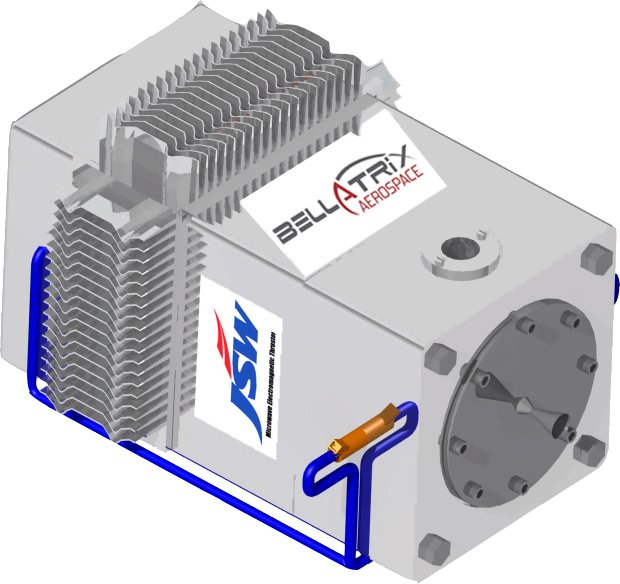
This hardware isn’t just lab prototypes anymore. Arka and Rudra both achieved space-qualified status in January 2024, with Rudra’s upgraded 0.3 HPGP thruster completing a successful in-orbit firing test aboard ISRO’s POEM-3 platform that same month, and a second-generation version tested again on POEM-4 in January 2025 — a test Bellatrix called a “hat-trick in space.” On the business side, NewSpace India Limited (NSIL), ISRO’s commercial arm, signed an MoU with Bellatrix in September 2024 and moved to integrate Pushpak into its launch manifests the following month, specifically to offer rideshare customers faster, cheaper access to their own precise orbits.
Harbinger: Bellatrix’s First Full Satellite Phones Home
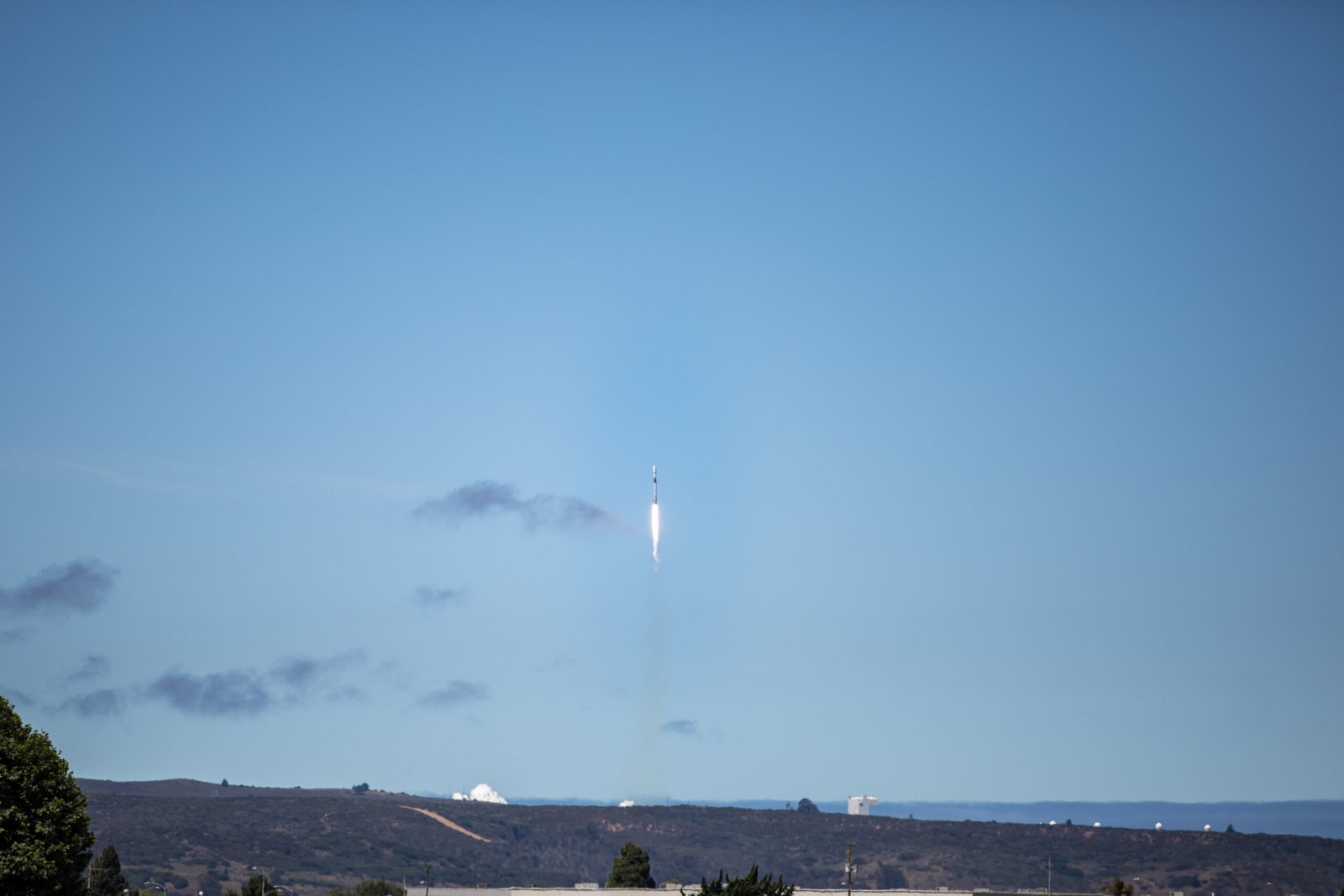
Everything above was Bellatrix building components for other people’s satellites. Harbinger, launched on 30 March 2026 aboard SpaceX’s Transporter-16 rideshare mission from Vandenberg Space Force Base in California, is Bellatrix’s own first full satellite — a technology demonstrator built to flight-test several in-house systems together, including its own attitude-determination-and-control system (ADCS), rather than just supplying hardware for someone else’s platform. The satellite made contact on its very first orbit pass, with Bellatrix confirming a locked signal and data received exactly as designed.
It’s a small milestone in absolute terms — one demonstrator satellite, not a constellation — but it matters for a company whose business is selling hardware other people trust enough to fly. A propulsion supplier that has never operated its own spacecraft in orbit is making a promise; one that has is showing a receipt.
Going Global: The TelePIX Deal and the Bet on Very Low Earth Orbit
In June 2026, Bellatrix announced its most significant customer win yet: a partnership with TelePIX, a South Korean optical payload manufacturer, to build a satellite that operates in Very Low Earth Orbit (VLEO) — roughly 180 to 230 km up, well below the 500-600 km where most Earth-observation satellites fly. The mission is targeted for no earlier than 2028. Bellatrix supplies the satellite bus, power, thermal and attitude control systems, plus an air-breathing electric propulsion (ABEP) system; TelePIX supplies its “Chouette” optical payload, a high-resolution, wide-swath camera that Bellatrix’s co-founder and COO Yashas Karanam says can capture images more than twice the width of comparable satellites at that resolution.
Flying this low is a genuine trade-off, not a free upgrade. The same optics deliver dramatically sharper imagery at 200 km than at 550 km, simply because the camera is closer to the ground — but the atmosphere at that altitude is thick enough to drag a normal satellite out of orbit within weeks. Staying there long-term means fighting that drag continuously, which is exactly the job an air-breathing electric thruster is built for: instead of carrying a finite tank of propellant, it can compress and ionise the wisps of atmosphere still present at that altitude and use that as reaction mass.
As Bellatrix Aerospace COO Yashas Karanam put it, “there is growing demand for technologies that can enable sustained operations in the 180-250 km altitude range” — and very few companies anywhere in the world have flight-proven hardware for it. Landing a foreign hardware customer like TelePIX for an unsolved, technically hard problem like this is a meaningfully different kind of validation for Bellatrix Aerospace than another funding round.
The $20 Million Question: Scaling From Prototype to Production
Bellatrix Aerospace closed a $20 million (~₹190 crore) Pre-Series B round in late March 2026, led by Cactus Partners, with new investors Hero Investment Office, 35North Ventures, Indusbridge Ventures and Monarch Holdings joining returning backers Inflexor Ventures, Pavestone, GrowX, StartupXseed and Survam Partners. It follows an $8 million Series A back in 2022 — a four-year gap in which the company went from ground-testing thrusters to flying two of them in space and landing its first satellite integration deal.
CEO Rohan Ganapathy framed the round around a specific transition: “This round reflects strong conviction in our ability to scale. We’ve flight-qualified our core technologies. Now we’re building the production infrastructure.” COO Yashas Karanam was more specific about what that infrastructure needs to do, saying the investment “ensures we can fulfill our multi-million-dollar backlog with the speed and margin required for global scale,” and separately noting the company is targeting lead times under six months on its propulsion hardware. The money is earmarked for expanding manufacturing capacity for both domestic and international satellite programmes, alongside a planned US satellite-production facility to go with the US subsidiary Bellatrix opened in April 2025 and an MoU it has signed with an as-yet-unnamed major American satellite manufacturer.
Bellatrix vs India’s Other Space-Tech Startups
It’s worth placing Bellatrix against the other Indian space startups this site has already covered, because they’re often lumped together as “India’s SpaceX moment” when they’re actually building almost entirely different things — propulsion, imaging satellites, satellite manufacturing, and launch vehicles are four separate businesses that only occasionally overlap as customers of each other.
| Startup | What It Builds | Headline 2026 Milestone |
|---|---|---|
| Bellatrix Aerospace | Satellite propulsion (electric & chemical) and orbital transfer vehicles | $20M raise, Harbinger’s first flight, TelePIX VLEO deal |
| Pixxel | Hyperspectral Earth-observation satellite constellation | $195M Series C |
| Dhruva Space | Full-stack small-satellite manufacturing (LEAP bus line) | Project Garud + Safran contract |
| Agnikul Cosmos | 3D-printed small-satellite launch vehicles | Continued Agnibaan test-flight campaign |
What Could Go Wrong
The honest risk here isn’t specific to Bellatrix — it’s the risk every hardware startup faces at exactly this stage. Flight-qualifying a thruster on a single technology-demonstration mission is a real achievement, but it is not the same as reliably manufacturing dozens of them a year to a fixed schedule and margin, which is precisely the “production infrastructure” this funding round exists to build. Plenty of propulsion and satellite-hardware startups globally have stalled at that exact transition.
The TelePIX deal is also a bet on a timeline, not a delivered product: the satellite isn’t slated to launch before 2028, which leaves two-plus years for specifications, funding, or priorities to shift on either side. And very-low-earth-orbit propulsion is a young field worldwide — Bellatrix has flight-tested components, but nobody, including Bellatrix, has yet proven an air-breathing electric thruster keeping a commercial satellite alive at 200 km for years on end. None of this makes the bet a bad one; it just means “flight-qualified” and “commercially proven at scale” are two different claims, and it’s worth watching which one Bellatrix can back up next.
Why Bellatrix Matters for India’s Space Economy
Propulsion is unglamorous compared to a rocket launch or a Moon mission, but it’s foundational: nearly every satellite India puts into orbit, government or private, needs some version of what Bellatrix builds, and a large share of that hardware has historically been imported. A credible domestic supplier lowers costs and cuts a real strategic dependency, the same logic driving India’s push toward privately built rockets and satellites elsewhere in this sector.
The TelePIX deal adds a second, less obvious point: being trusted by a foreign customer to build flight hardware — not software, not services, actual hardware another country’s satellite depends on to work — is a different, arguably harder-won signal than a funding round. Funding rounds reflect what investors believe; a hardware contract reflects what an engineering team elsewhere in the world was willing to bet their own mission on.
Frequently Asked Questions About Bellatrix Aerospace
What is Bellatrix Aerospace?
Bellatrix Aerospace is a Bengaluru-based space-tech company, founded in 2015, that builds satellite propulsion systems — electric and chemical thrusters — and orbital transfer vehicles, and has more recently begun building its own small satellites.
What does Bellatrix Aerospace build?
Its three main products are Arka, a Hall-effect electric thruster; Rudra, a green-propellant chemical thruster; and Pushpak, an orbital transfer vehicle that ferries rideshare satellites to their own precise orbits after a shared launch.
What is Harbinger?
Harbinger is Bellatrix Aerospace’s first full satellite, a technology demonstrator launched on SpaceX’s Transporter-16 rideshare mission on 30 March 2026 to flight-test in-house systems including its own attitude-determination-and-control system.
What is the TelePIX deal?
Announced in June 2026, it’s a partnership between Bellatrix and South Korean optical payload maker TelePIX to build a satellite operating in Very Low Earth Orbit (180-230 km), targeted for launch no earlier than 2028, combining Bellatrix’s propulsion and bus with TelePIX’s high-resolution imaging payload.
How much funding has Bellatrix Aerospace raised?
Bellatrix raised an $8 million Series A in 2022 and a $20 million Pre-Series B round in March 2026 led by Cactus Partners, bringing in new investors including Hero Investment Office and 35North Ventures alongside returning backers like Inflexor Ventures and Pavestone.
What is a Hall-effect thruster?
A Hall-effect thruster is a type of electric propulsion that ionises a propellant gas and accelerates it using a magnetic field to generate thrust. It uses far less propellant than a chemical engine but produces very low thrust, making it suited to slow orbital adjustments rather than launch.
Is Bellatrix Aerospace planning to launch its own rockets?
No. Bellatrix originally set out to build small launch vehicles when it was founded in 2015, but pivoted in 2022 to focus entirely on satellite propulsion systems and orbital transfer vehicles instead of rockets.
The Bottom Line
Bellatrix Aerospace spent most of a decade doing the unglamorous work of qualifying thrusters nobody outside the industry pays attention to, and 2026 is the year that patience started converting into things worth writing about: a satellite of its own actually working in orbit, a foreign customer betting real hardware on it, and a $20 million war chest to go from workshop-scale to factory-scale.
The TelePIX deal in particular is the more interesting Bellatrix Aerospace story than the funding round — anyone can raise money on a good pitch, but getting a South Korean payload company to fly its camera on your bus for a genuinely unsolved orbital regime is a bet on engineering, not marketing. The honest caveat is that 2028 is a long way off and “flight-qualified” still isn’t “mass-produced,” so the next thing worth watching isn’t another Bellatrix Aerospace funding headline, it’s whether the company can actually ship propulsion hardware on the six-month timelines it’s now promising customers.
Also Read:
- Pixxel Explained: India’s Incredible $195 Million Space-Tech Bet (2026)
- Dhruva Space Explained: India’s Bold Bet on Building Satellites at Scale (2026)
- Agnikul Cosmos Explained: India’s Incredible 3D-Printed Rocket Bet (2026)
- What is ISRO? A Complete Beginner’s Guide to India’s Space Agency
- SpaDeX Mission: How India Mastered Space Docking, And Why It Changes Everything