NVS-03 Explained: The Indigenous Atomic Clock Bringing NavIC Back to Life (2026)
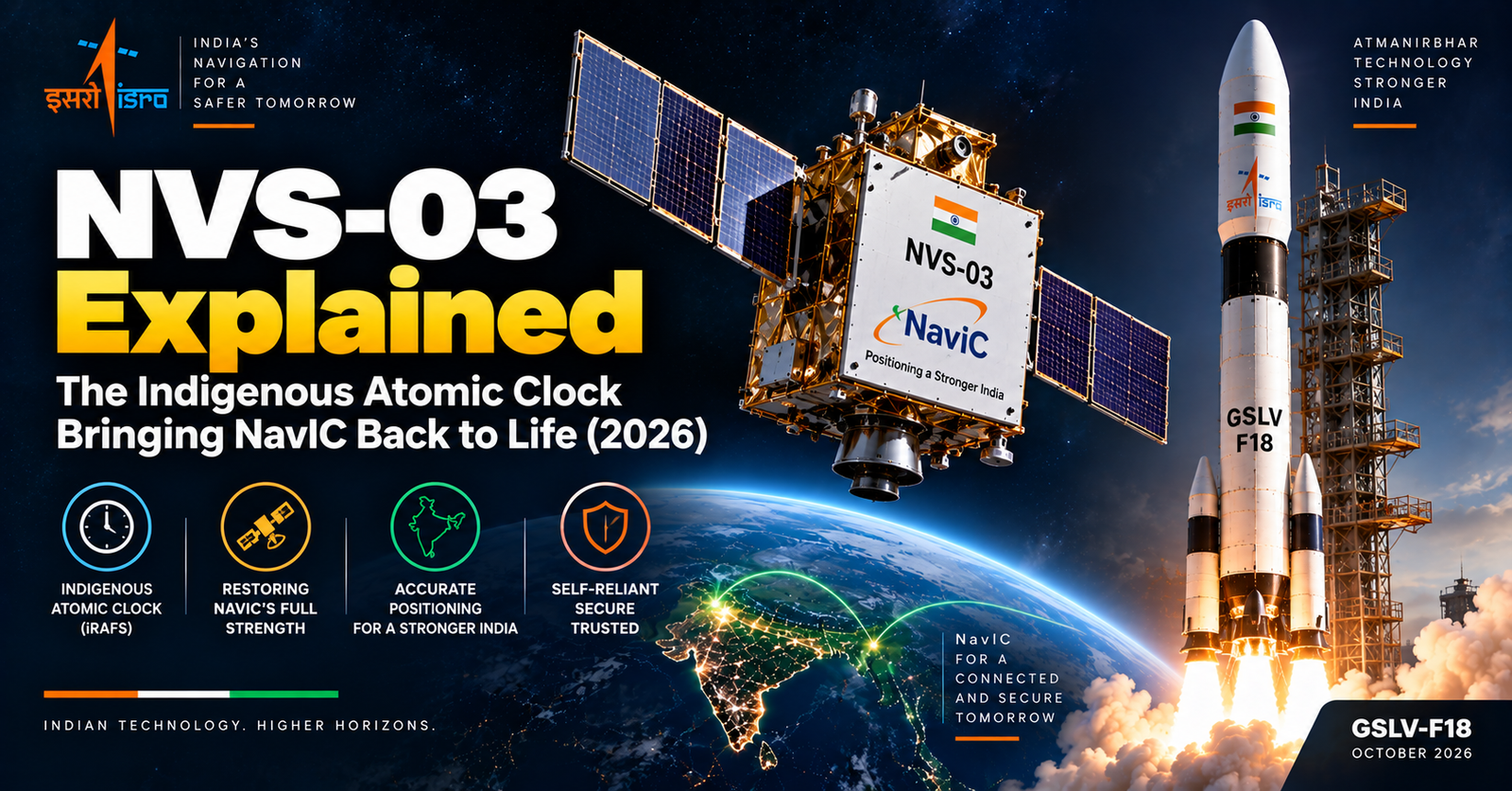
NVS-03 explained: an NVS-series NavIC satellite undergoing pre-launch preparation in ISRO's cleanroom, the same design lineage as NVS-03

Mission File Satellite NVS-03 (IRNSS-1L) Launch vehicle GSLV-F18 Launch window October 2026 Launch site SDSC SHAR, Sriharikota Mass 2,232 kg Target orbit Geosynchronous, 129.55°E Atomic clock Indigenous Rubidium (iRAFS) Design life 12 years In This Article What Is NVS-03 and Why Does It Matter? The Atomic Clock Story: From Swiss Failure to Indian Comeback Inside … Read more
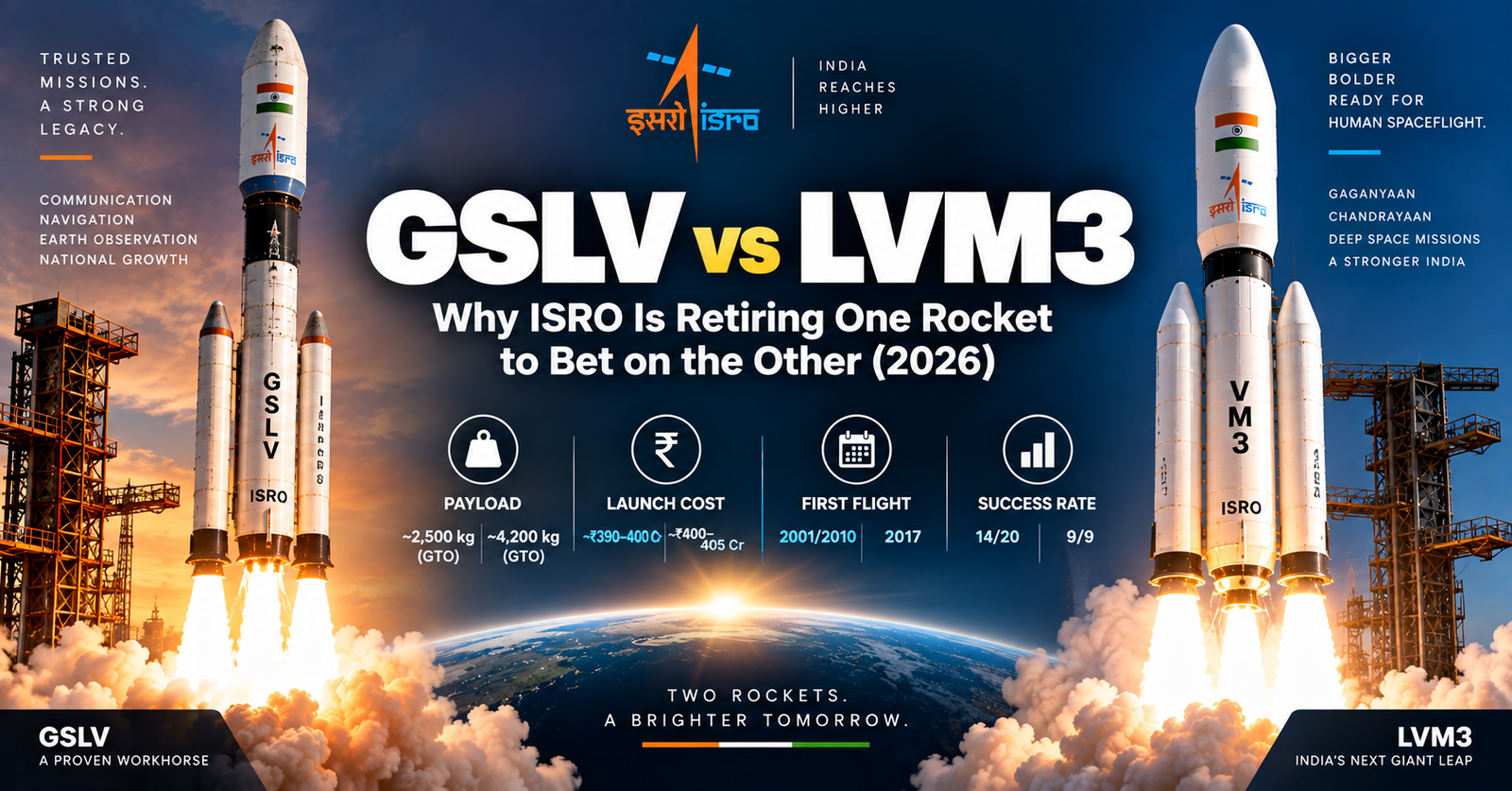
GSLV vs LVM3: Why ISRO Is Retiring One Rocket to Bet on the Other (2026)

GSLV vs LVM3 comparison: GSLV Mk II rocket lifting off carrying the NISAR satellite

Quick Comparison GSLV payload (GTO) About 2,500 kg LVM3 payload (GTO) About 4,200 kg GSLV cost per launch Roughly Rs 390 to 400 crore LVM3 cost per launch Roughly Rs 400 to 405 crore GSLV first flight 2001 (Mk I), 2010 (Mk II) LVM3 first flight 2017 GSLV flights so far 20, with 14 fully … Read more

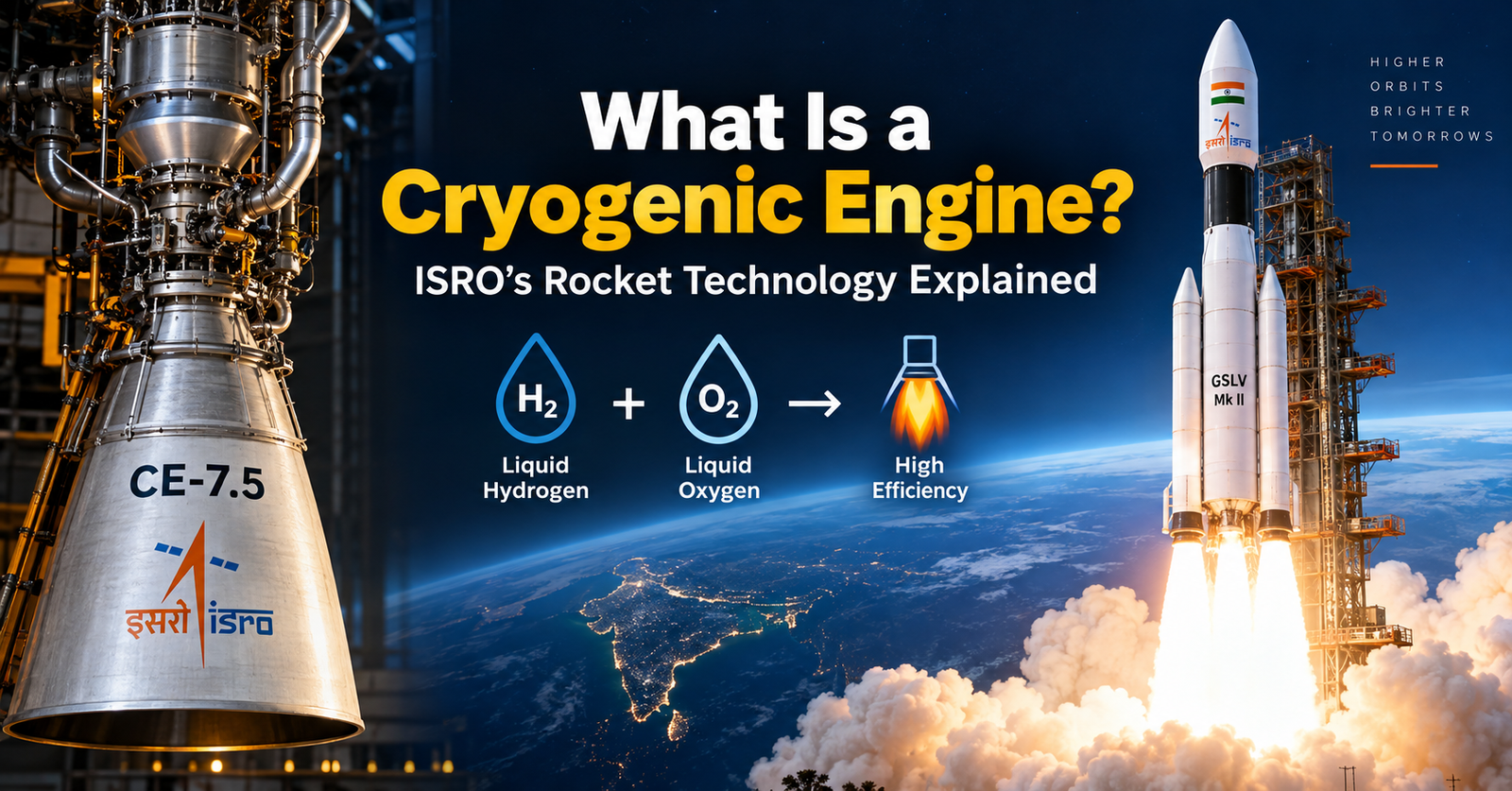
What Is a Cryogenic Engine? ISRO’s Rocket Technology Explained

Editorial illustration of a cryogenic rocket engine using liquid hydrogen and oxygen in an Indian launch vehicle.

Engine File Developed by ISRO (LPSC) Programme CUSP Engine CE-7.5 Propellants Liquid H2 + Liquid O2 Cycle Staged combustion Used in GSLV Mk II upper stage Inducted GSLV-D5, Jan 2014 Status Operational In This Article What Is a Cryogenic Engine? Why Were Cryogenic Engines Developed? How Does a Cryogenic Engine Work? Why Is a Cryogenic … Read more

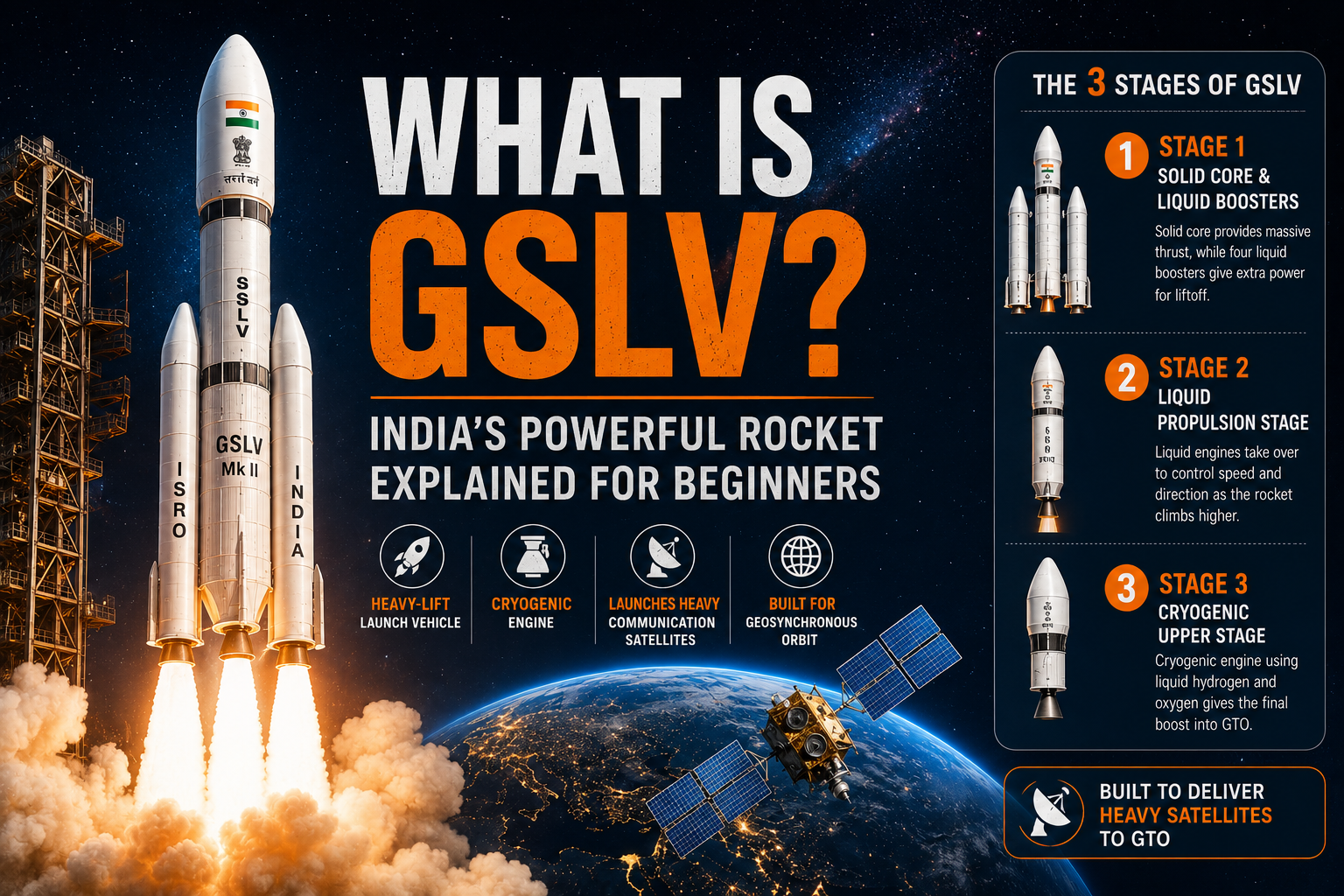
What is GSLV? India’s Powerful Rocket Explained for Beginners (2026)

GSLV rocket

Discover everything about GSLV, India’s powerful Geosynchronous Satellite Launch Vehicle. Learn how it works, why its cryogenic engine is a breakthrough, its three-stage design, major ISRO missions, and how GSLV differs from PSLV—all explained in simple language for students, beginners, and space enthusiasts.